

If you’ve got a nagging toothache, an old filling that you think may be failing, or you’ve recently chipped a tooth while eating or playing sports, it’s time to start thinking about how to restore your smile. And a dental crown in Flower Mound, TX from Dr. Brett Steven Titensor or Dr. Jackson Mann may be just what you need.
Dental crowns are the best way to cover up and protect a damaged tooth, prevent further damage, and ensure that you can smile proudly and keep eating your favorite foods for years to come. But it’s not always easy to understand the process.
So in this guide from Titensor Dental, we’re here to break things down for you. We’ll discuss the basics of crowns, their benefits, the different types that are available (including same-day CEREC crowns at our office), and much more. Let’s get into the details and discuss everything that patients should know about dental crowns and how they work.
Understanding Dental Crowns And How They Restore Teeth
So, what is a dental crown? Also sometimes called a “cap,” a dental crown is a hollow false tooth. It’s designed to completely cover up and replace a damaged tooth, all the way down to the gumline.
This protects the underlying tooth structure from further damage and sensitivity, while also restoring the appearance and natural function of your tooth. With a crown, you can speak, smile, bite, and chew without any discomfort.
Crowns are typically recommended when a tooth has extensive damage, but is still healthy enough that it doesn't need to be extracted. Here are a few common situations when a crown may be recommended:
- Protecting a tooth with a deep cavity that’s too big for a filling
- Replacing a large, worn-out, or failing filling
- Covering up a tooth after root canal therapy to remove an infection
- Repairing a cracked, chipped, or broken tooth
- Restoring the shape and strength of a tooth worn down by grinding
The benefits of dental crowns
Wondering why dental crowns are such a popular way to cover up and protect damaged teeth? Here are just a few of the benefits you’ll enjoy if you restore your smile with a dental crown in Flower Mound, TX from Titensor Dental:
Totally natural look and feel – Each crown is custom-made to fit into your smile perfectly. We use ceramic materials to ensure that your new tooth looks completely lifelike, too.
Preserves your existing tooth – In many cases, the only alternative to a crown may be extracting your tooth. As conservative dentists, Dr. Jackson and Dr. Titensor believe that it’s always better to preserve your natural tooth whenever it’s possible to do so.
Prevents further complications – Crowns cover up and protect your tooth, preventing further complications. For example, if you crack a tooth and don’t get a crown right away, you could end up with an infected tooth that requires root canal therapy. In most cases, getting a crown ASAP will save you time, money, and headaches.
Long lifespan – Most types of crowns last at least 15 years with proper care, and can last 20+ years in some cases. This makes a crown a great investment in your long-term oral health.
Minimal care requirements – Once it’s in place, you can treat your crown just like a natural tooth. Brush and floss regularly, eat a healthy diet, and see Dr. Titesnor or Dr. Mann for a checkup every six months. That’s all there is to it!
Crowns vs. fillings – what’s the better choice?
Crowns and fillings are closely related. Both of these treatments are used to restore damaged or decayed teeth. But which one is the right option for your situation? The answer is that it depends on the extent of the damage to your tooth and the amount of protection it needs.
Tooth fillings are a great choice for minor-to-moderate cavities, or for teeth with slight chips or damage. They're inexpensive, quick to apply, and provide excellent protection in these situations.
However, fillings are not as durable as crowns, and they don’t offer the same level of protection. For a severely decayed, infected, or damaged tooth, a dental crown from the team at Titensor Dental will almost always be a better choice.
Breaking Down Common Types of Dental Crowns
Should you choose a zirconia crown? What about metal crowns? Are they still used in dental offices? And what's a porcelain-fused-to-metal crown? And where do temporary crowns fit into the picture? You've got questions, and you can get all the answers you need below as we break down the differences between the most common dental crown types.
All-ceramic crowns
All-ceramic crowns are rising in popularity, partially thanks to same-day CEREC crown technology. This type of crown is carved out of a solid block of ceramic material, such as zirconia or porcelain.
These are ideal materials for crowns because they closely match natural enamel in color, shade, and overall translucence. With an all-ceramic crown, you can enjoy a completely lifelike smile. Your new crown will be completely indistinguishable from a natural tooth.
At Titensor Dental, Dr. Titensor and Dr. Mann can use CEREC CAD/CAM technology to craft a ceramic crown in a single two-hour visit. There's no need for follow-ups, long wait times, or uncomfortable temporary crowns.
Metal crowns
Metal crowns can be made from stainless steel or from a mixture of gold and other precious metals. They are extremely strong and durable, but because they're made of metal, they do not look like natural teeth at all.
For this reason, metal crowns are not as common in modern dentistry. Still, they are sometimes recommended for rear molars because of their strength. They hold up very well to strong biting and chewing forces, which makes them especially appealing to patients who may grind their teeth.
Porcelain-fused-to-metal (PFM) crowns
These are porcelain crowns that have a layer of ceramic material fused to a metal base. PFM crowns are the most popular type of lab-made crown. This is because they blend the strength and affordability of metal crowns with the natural appearance of ceramic crowns.
The only real drawback of PFM crowns is that the metal base can sometimes become visible if your gums recede after crown placement. This can be avoided with proper gum care, but it's still something to keep in mind when making your decision.
Temporary (resin) crowns
Temporary crowns are made from plastic resin. As the name suggests, they are not meant to permanently restore a tooth. Instead, temporary crowns are used to cover up a tooth between visits to the dentist.
For example, if you are getting a lab-made crown, it will take a couple of weeks for the final custom crown to be finished and sent back to Titensor Dental. In the meantime, a resin crown can be used to cover up and protect your trimmed tooth until you get your final crown.
How The Dental Crown Procedure Works

If you've never gotten a crown before or it's been a while since you've had to fix a tooth with a dental crown, you may be wondering what to expect during your visit with Dr. Titensor or Dr. Jackson at our office. So let's break down all of the crown procedure steps that are involved in the process.
Initial consultation
First, you'll meet with Dr. Jackson or Dr. Titensor to determine if a crown is right for you. They will examine your tooth, look at the extent of the damage and/or decay, and take x-rays to look for any issues that may be hidden below the surface. This also helps our team determine if any additional treatments, such as root canal therapy, may be necessary to preserve and protect your tooth.
Tooth prep and fitting
Once you're approved for a crown, you'll come back for a separate appointment. Dr. Titensor or Dr. Jackson will clean and numb your mouth, then use a dental drill to trim away any damaged material from your tooth and prepare it for your crown.
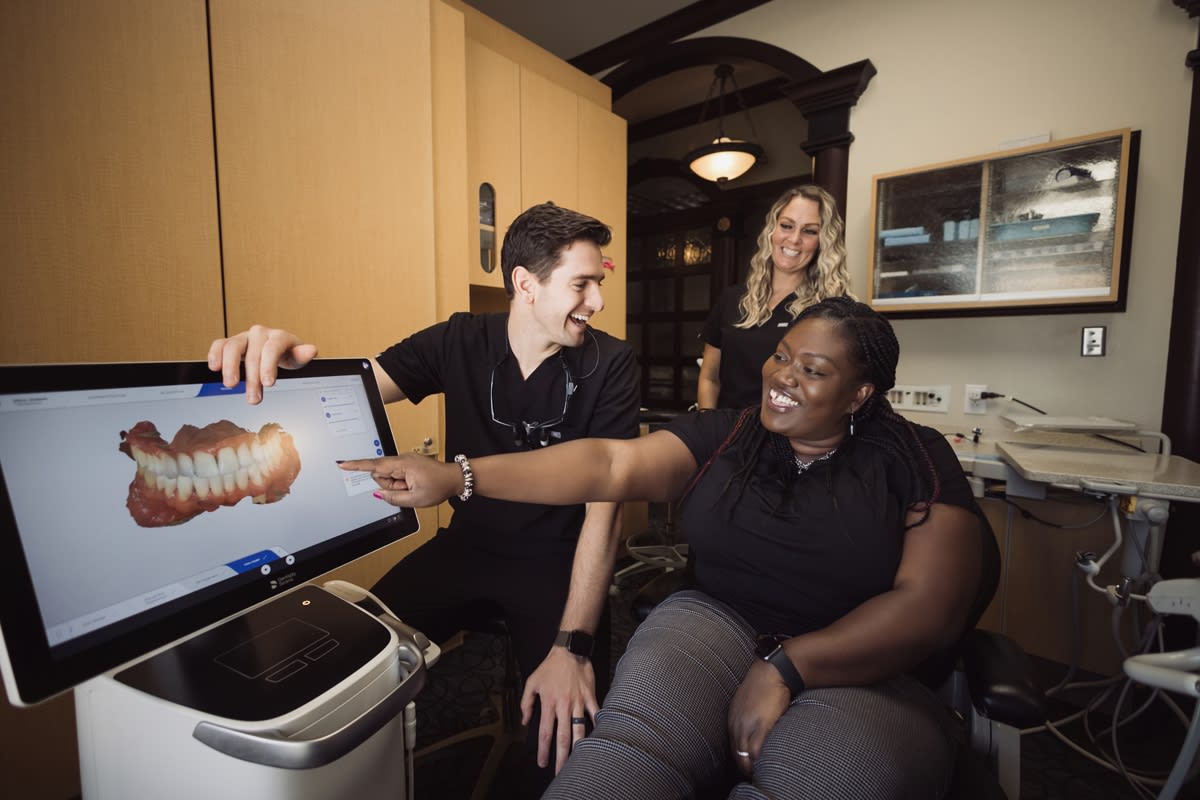
Once that's done, your dentist will take a 3D scan of your mouth using a hand-held digital device. This process is completely non-invasive and creates a model of your mouth that can be used to design your new crown.
Crafting your new crown
If you're getting a lab-made crown, your dentist at Titensor Dental will send your info to our partner dental lab, where a skilled technician will craft it based on your 3D scans. It will take a couple of weeks to make your crown and send it back to our office, so you'll be sent home with a temporary crown in the meantime.
If you opt for a same-day CEREC crown, there's no need for a dental lab. Dr. Titensor or Dr. Mann will use your 3D scan to create a crown design right in our office, then send it to our CAD/CAM milling unit. This unit will carve your new crown out of a solid block of ceramic material in just a few minutes.
Permanent crown placement
If you're getting a lab-made crown, you'll come back to our office in a few weeks once your final crown arrives. Dr. Titensor or Dr. Mann will remove your temporary crown, clean up your tooth, and then bond your permanent crown in place with dental cement, restoring your smile.
If you're getting a CEREC crown, there's no need to wait. As soon as your crown is done, Dr. Titensor or Dr. Mann will retrieve it and place it onto your tooth. After any final adjustments, they will bond it in place with dental cement and you'll be sent home to enjoy your new tooth. The entire same-day crown process typically takes a single two-hour visit at our office in Flower Mound, TX.
Caring For Your New Dental Crowns – Tips & Recommendations

Worried that you're going to have to change your entire oral hygiene routine when you get a dental crown? We've got good news for you. All you have to do is treat your new crown just like a natural tooth! If you want to keep it healthy, you should:
- Brush twice a day – Brushing at least twice a day for two minutes with ADA-accepted fluoride toothpaste helps keep both your crown and your natural teeth healthy.
- Floss once daily – Flossing removes particles that your toothbrush can't reach, and is just as important for dental crowns as it is for natural teeth.
- Use alcohol-free mouthwash – ADA-accepted mouthwash helps rinse away food particles that are knocked loose by brushing and flossing, and helps keep bacteria levels under control, too.
- Eat a "tooth-healthy" diet – You should cut back on sugary snacks and drinks and drink plenty of water to stay hydrated. Eating a nutritious diet full of whole grains, healthy dairy, fresh fruits and vegetables, and lean meats will also help protect your oral health and whole-body health.
- Consider lifestyle adjustments – Reducing alcohol intake and quitting smoking, vaping, and all other types of nicotine/tobacco use can help you protect the health of your crown and your natural teeth, too.
Along with these at-home care tips and lifestyle recommendations, it's important to see Dr. Titensor or Dr. Mann at Titensor Dental every six months for a checkup. During your routine cleanings and oral exams, our team can make sure that your crown and your natural teeth are in great shape.
The Costs of Dental Crowns in Flower Mound – What To Expect
Wondering how much you'll pay for a dental crown in Flower Mound, TX at Titensor Dental? Well, the price varies depending on a lot of different factors, including:
- The material used (ceramic, metal, porcelain-fused-to-metal)
- The location of the tooth (front tooth, rear molar, etc.)
- Whether or not an old filling needs to be removed
- The extent of tooth damage
- The number of teeth being treated with crowns
- Whether or not additional treatments like a post and core are necessary
- The geographic location of your dentist
At Titensor Dental, we offer transparent pricing for our patients. You'll always know exactly what you'll pay for your treatment. And though we are not in network with any insurance plans, we're happy to file an out-of-network claim with your insurance provider on your behalf.
Not only that, but we also offer third-party financing for qualifying patients. If you need help fitting a crown into your budget, you can split the cost into reasonable monthly installments. Want more info? Just ask our team about payment plans during your visit.
How Crowns Work With Bridges To Replace Missing Teeth
Crowns are an essential part of dental bridges. A dental bridge consists of one or more false teeth (pontics) that are supported by a pair of dental crowns. These crowns attach to healthy “abutment teeth” on either side of a gap in your smile.
This “bridges” the gap, giving dental bridges their name. Bridges are usually made from a mixture of both ceramic and metal materials. They can be used to restore a single missing tooth, or even a row of two, three, or four teeth in some cases.
Bridges are an excellent choice for patients who have healthy teeth on either side of a gap in their smile and would prefer a faster, more affordable alternative to dental implants. If you’ve lost one or more of your teeth and you’re interested in dental bridges, book a visit with Dr. Jackson or Dr. Titensor today to learn more and see if they're right for you.
Answering Top FAQs About Dental Crowns
Still have questions about dental crowns? We're here to help. Here are a few quick answers to a few top FAQs that patients ask Dr. Titensor and Dr. Mann at our office:
How long do dental crowns last?
Ceramic crowns and porcelain-fused-to-metal crowns usually last between 10-15 years, though they can last even longer with great at-home care. Metal crowns have a longer lifespan of 20+ years, especially if they're primarily made of gold or other precious metals.
Are dental crowns painful?
No. Your mouth will be completely numb during the treatment process. You may feel a little bit of tenderness and sensitivity for a few days after your procedure, but that's it.
What is the difference between crowns and veneers?
Crowns are a restorative procedure meant to treat damaged teeth. They cover up the entire tooth all the way down to the gumline. In contrast, veneers are meant for cosmetic dentistry and are only applied to healthy teeth. Porcelain veneers only cover up the front tooth surface, and are not meant to repair damaged teeth.
Can crowns stain or discolor?
No. Crowns are totally stain-resistant, so they will maintain their color forever. However, the natural teeth around your crown can still stain, so it's important to maintain good oral hygiene and get regular teeth cleanings at Titensor Dental.
How should I care for my crown?
You can treat it just like a natural tooth. Brush twice a day, floss once daily, and consider adding alcohol-free antibacterial mouthwash into your routine, too. And every six months, come to Titensor Dental for a teeth cleaning and checkup from Dr. Jackson or Dr. Titensor. That's all there is to it!
Explore All Of Your Crown Options At Titensor Dental

If you’ve got a toothache, think you have a cavity, or have recently chipped or broken a tooth, a dental crown from Titensor Dental may be just what you need to restore your smile and your oral health.
With both lab-made and CEREC same-day crowns available, we offer plenty of flexibility at our office. Whether you’re interested in all-ceramic porcelain crowns, lab-made PFM crowns, or any other type of restoration, our team is here for you.
So don’t wait. Give us a call at (972) 355-9545 or contact us online to schedule a consultation with Dr. Brett Steven Titensor or Dr. Joseph Jackson Mann. We offer expert guidance, advanced technology, and a patient-focused approach that ensures you get exactly what you need for a healthy, confident, and long-lasting smile.