
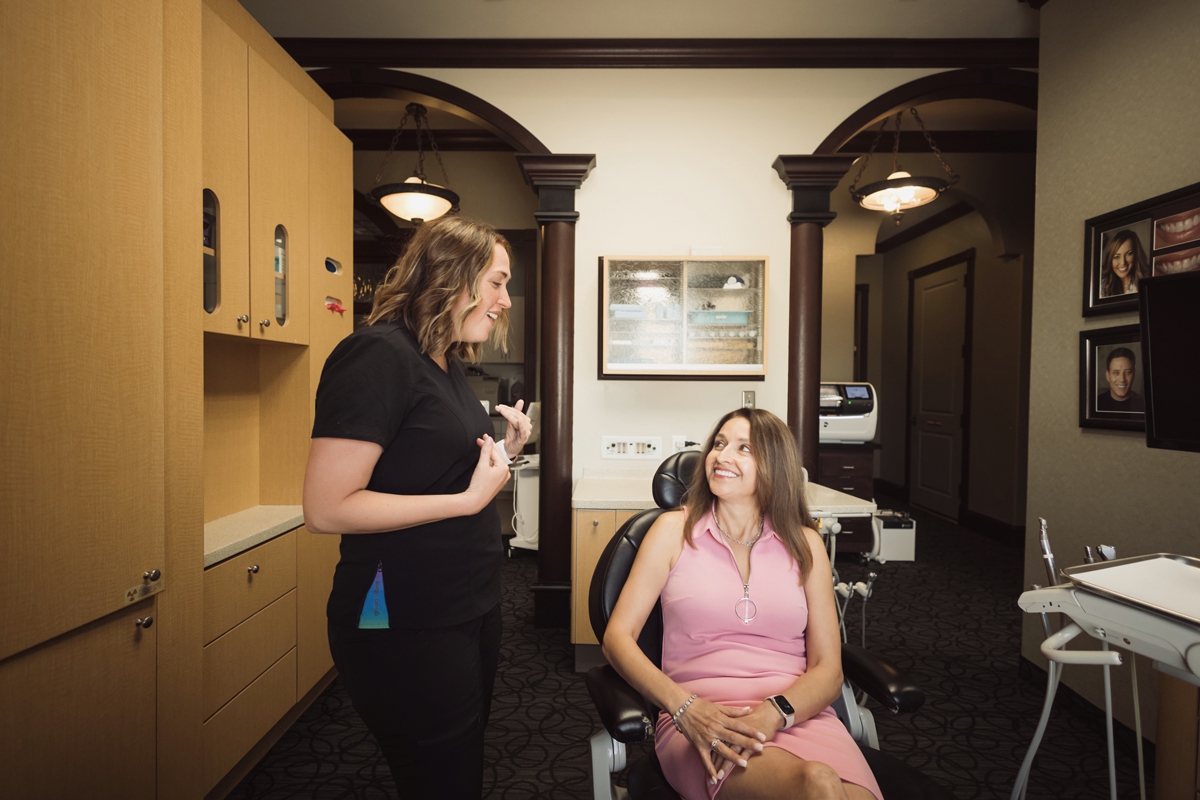

Dental implants from Titensor Dental are a fantastic long-term investment in your oral health. Whether you’re replacing one, several, or all of your teeth with implants, you’ll enjoy a natural-looking, easy-to-maintain, and fully functional smile that is designed to stand the test of time.
But before you can enjoy decades of healthy, happy smiles, you need to prepare for the healing and recovery process. Following Dr. Brett Titensor or Dr. Jackson Mann’s recovery instructions is essential for the best possible results.
Not sure what to expect? You’ll get a full set of instructions on how to recover after your dental implant surgery at Titensor Dental. But if you’re looking for a sneak peek and some dental implant recovery tips, you’re in the right place! In this comprehensive guide to dental implant healing and aftercare, we’ll get into all the details.
Understanding How Dental Implants Work
Dental implants are small, screw-shaped pieces of medical-grade titanium. They are designed to be surgically placed directly into your gums and jawbone in the area where you’ve lost a tooth. Over time, the implant heals and permanently bonds with the jawbone.
This is a process called “osseointegration.” It means that, for all intents and purposes, the implant becomes a natural part of your mouth. It works as an artificial tooth root. One implant can be used to support a single false tooth (crown), which is the most common type of dental implant.
Multiple implants can also be used to restore several teeth with an implant-supported bridge, or even a full mouth of teeth with removable implant-supported dentures or non-removable treatments like All-On-4. The appropriate treatment depends on your oral health, how many teeth you’ve lost, your budget, and many other factors.
The Importance Of Implant Aftercare Post-Surgery
Because dental implants are meant to heal and bond with your jaw tissue permanently, proper post-surgical care is absolutely essential. You need to take good care of your implant to avoid complications, heal properly, and ensure that it fully integrates with your jawbone to become a stable, strong artificial tooth root.
If you don’t take the proper steps to care for your mouth after implant surgery, there are a few different complications that can happen:
- Peri-implantitis – This is an infection of the gums near the implant site. It’s primarily caused by poor oral hygiene and failing to follow recovery instructions, though some other factors like smoking and diabetes can contribute to the risk of developing peri-implantitis.
- Dislodging blood clots – Unlike with a tooth extraction, there’s no risk of “dry socket” with a dental implant. However, blood clots do still form around the implant site, so things like smoking, using a straw, or brushing the implant site too early can dislodge them and impair the healing process.
- Implant damage – In rare cases, dental implants can be damaged by repeated stress (such as eating hard foods too soon), dental trauma from a slip and fall, or even repeatedly moving the implant around with your tongue or fingers.
Implant Healing Timeline – What To Expect
24 hours after surgery
Immediately after your visit, you’ll get a gauze pack to bite down on to absorb blood, which should slow down and stop within a couple of hours. Some intermittent bleeding is normal for the next few days.
You should take it easy for the rest of the day after your surgery. You can start eating as soon as your numbing wears off, but you should stick to very soft or liquid foods and avoid chewing on the side of your mouth with the implant.
When it comes to oral hygiene for implants, you can brush your other teeth normally, but avoid the implant site. You can use a warm salt water rinse to keep the treatment area clean. Do not aggressively swish or spit when using the salt water rinse.
1-3 days after surgery
You should continue to take things easy during this time and avoid any heavy exertion or exercise, which can lead to more pain and discomfort. You should continue eating plenty of nutritious soft or liquid foods. Make sure to stay hydrated to help your mouth heal.
Oral hygiene is similar to the initial 24 hours after your surgery. Brush your other teeth and continue using a saltwater rinse or prescription mouth rinse to clean your implant site, as directed by your dentist.
3-7 days after surgery
During this time, symptoms like swelling and discomfort will peak and start to fade. You can typically resume more strenuous activities, though things like running and heavy lifting may still cause some discomfort.
As far as your diet goes, you can begin adding firmer foods into your diet as long as they are comfortable to eat. Things like macaroni, scrambled eggs, and oatmeal are good places to start. You should still avoid chewing on the side of your mouth with the implant, if possible.
Continue keeping your mouth clean, but avoid brushing directly over the implant site during this first week. Instead, use a soft-bristled toothbrush to gently clean the surrounding and adjacent teeth while following your dentist's instructions for caring for the surgical area.
1-3 weeks after surgery
Your mouth should feel significantly better within a week, and your gums should be fully healed within 2-4 weeks. You should be able to resume a mostly normal diet, though it’s still a good idea to avoid things like super crunchy, hard, or spicy foods for a few weeks longer.
You should be feeling no serious pain or discomfort, and all other symptoms like swelling and bruising will also fade during this time. You can resume normal brushing and flossing, but we still recommend being gentle around your implant.
You can also start brushing the implant site directly. Use a soft-bristled toothbrush and be very gentle to avoid disturbing the dental implant as it continues to heal and bond with your jawbone and gum tissue.
If Dr. Jackson or Dr. Brett placed any non-resorbable sutures at the time of surgery, the team will help remove them at this time. They slide right out!
3-6 months after surgery
After the first month or so, the first stage of the implant healing process will be complete. But it will take a total of about 3-6 months for the implant to fully bond with your jawbone (osseointegrate).
There are no special care precautions you need to take during this time. However, you may be scheduled for multiple follow-ups at Titensor Dental. Make sure to come to these visits so that Dr. Brett or Dr. Jackson can keep an eye on your recovery process, begin crafting your new tooth, and ensure that your smile restoration is on track.
What To Eat After Dental Implant Surgery – Our Recommendations
Wondering what foods to eat after dental implant surgery? For the first few days, you’ll want to eat soft or liquid foods that are nutritious and support healing. Good options include smoothies, milkshakes, yogurt, broth-based (non-chunky) soups, and pudding. A well balanced diet will help the healing process. Consider a daily multivitamin as well to ensure proper healing.
After a few days, you can start adding firmer foods into your diet. We recommend soft scrambled eggs, macaroni, oatmeal, mashed potatoes, and other foods that require minimal chewing.
A week or so after your surgery, you can start adding firmer foods into your diet as long as they feel comfortable to eat and aren’t causing pain or irritation to your implant site. You can start eating soft, non-crusty bread, soft meats like chicken and fish, cheese, and anything else that is not causing you discomfort as you eat.
2-3 weeks after surgery, most patients are able to resume a fully normal diet. However, we still recommend avoiding certain foods for a few more weeks, such as extremely tough, chewy, hard, and spicy foods. Some examples include bagels, baguettes, beef jerky, hard candies, and hot sauce.
Tips For Short And Long-Term Implant Maintenance
Dental implants are a great investment in your oral health. With proper care, you can expect your new smile to last for decades. Wondering how to maintain your implants to get the best long-term results? Here are some tips for both the initial recovery process and for long-term implant health.
Caring for newly-placed implants
The most important thing is to follow all of the instructions provided to you by Dr. Brett or Dr. Jackson at Titensor Dental. They will provide you with all of the information you need to minimize your risk of complications and enjoy a smooth and quick recovery process.
During the initial healing period, you should also be on the lookout for signs of potential complications. Contact our team for a follow-up right away if you notice issues like:
- Bleeding that’s heavy or continues for more than 1-2 days after surgery
- Serious pain and discomfort that lasts for more than a few days and worsens
- Implant mobility (you can feel the implant moving around in your mouth)
- Inflammation or discoloration of the gum tissue near your implant
- Bad breath or a foul taste in your mouth
Other than this, make sure you’re coming into Titensor Dental for all of your follow-up visits as your implant continues to heal. Periodic checkups allow your dentist to track your recovery process and ensure that everything looks good.
Long-term implant care tips
When it comes to long-term dental implant health, a good oral hygiene routine is absolutely essential. Brushing twice per day, flossing once per day, and using antibacterial mouthwash helps keep your implants and your natural teeth healthy. This reduces your risk of complications like peri-implantitis.
Lifestyle changes can also help prolong the lifespan of your implants. For example, quitting smoking will ensure proper healing during the initial surgery and reduce the risk of implant failure dramatically in the coming years, too. A healthy diet and proper management of other health conditions like diabetes can also help your implants stay healthy for the long term.
Finally, do not skip twice-yearly dental checkups at Titensor Dental. Routine oral exams and teeth cleanings help Dr. Brett or Dr. Jackson keep an eye on your oral health. During each visit, they will check both your natural teeth and your implants to make sure that you have a clean bill of dental health.
Common Mistakes To Avoid After Dental Implant Surgery
- Using a straw or spitting – Forceful spitting or using a straw causes a lot of suction. This can disturb the dental implant site, which may impair the proper healing of the area. Avoid drinking with a straw or spitting forcefully after brushing for at least 72 hours after surgery.
- Smoking or vaping – Similarly to using a straw or spitting, the action of smoking or vaping causes a lot of suction in the mouth. Not only that, but tobacco and nicotine can irritate the implant site and impair healing. You cannot smoke or vape for at least five days after surgery. Ideally, you should quit permanently to prevent future complications and protect your implant and your oral health.
- All other types of tobacco/nicotine use – Using Zyns, snus, chewing tobacco, or any other type of nicotine or tobacco product can also impair the healing process. You should quit using these products for at least four weeks after treatment.
- Messing around with your implant – You should avoid the temptation to use your tongue or fingers to touch or mess around with your dental implant. If you put too much pressure on the implant as it heals, it’s more likely to fail. Avoid pressing on, twisting, wiggling, or otherwise “messing around” with your new implant.
- Eating hard or crunchy foods too quickly – Extremely hard or crunchy foods can irritate or even damage the implant site if you eat them too quickly after surgery. Examples include tortilla chips, ice, popcorn, and some fresh fruits like apples. Avoiding these foods for at least 3-4 weeks helps minimize the risk of complications.
Answering FAQs About Caring For Dental Implants
- What is dental implant aftercare? Dental implant aftercare is the process of caring for your mouth after you get implant placement surgery. It involves avoiding certain foods, taking things easy for a few days, and paying attention to your surgical site to make sure you’re free of complications like infections.
- How long does the implant healing process take? It will only take 2-3 weeks to heal from the initial surgery. However, it will take between 3-6 months for your new implant to fully bond with your jawbone.
- What should I know about implant maintenance? Beyond routine at-home brushing and flossing, you should visit Titensor Dental for a teeth cleaning and oral exam every six months. During this time, Dr. Brett or Dr. Jackson will also take a look at your implants, clean them, and make sure that everything looks good.
Interested In Dental Implants? Come To Titensor Dental
If you’re interested in a permanent alternative to dentures or dental bridges, dental implants in Flower Mound, TX from Titensor Dental may be just what you need. At our office, Dr. Brett and Dr. Jackson are both experienced implant dentists.
Whether you’re interested in replacing just one tooth or you need full-mouth reconstruction, our team is ready to help you explore the benefits of dental implants. Give us a call at (972) 355-9545 or visit Titensor Dental to book your first visit with Dr. Brett or Dr. Jackson right away.